info@mvicambodia.org 0979519123/0889517123

Our Projects

16 Jun
Driving Practical Solutions for Climate-Resilient Livelihoods: MVi Organizes the Second Staff Capacity Building Training under the MLNP Project
Project  : Driving Practical Solutions for Climate-Resilient Livelihoods: MVi Organizes the Second Staff Capacity Building Training under the MLNP Project
Location : Stung Treng Province, Cambodia
Date : 16 June 2026

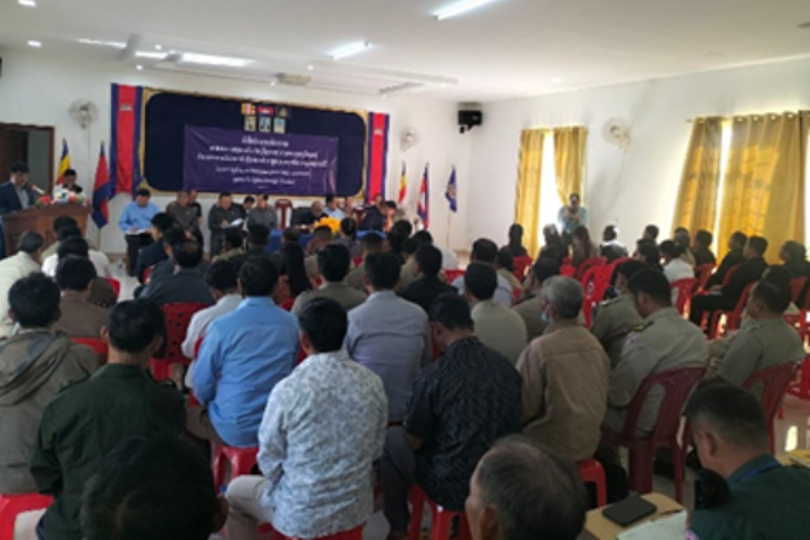
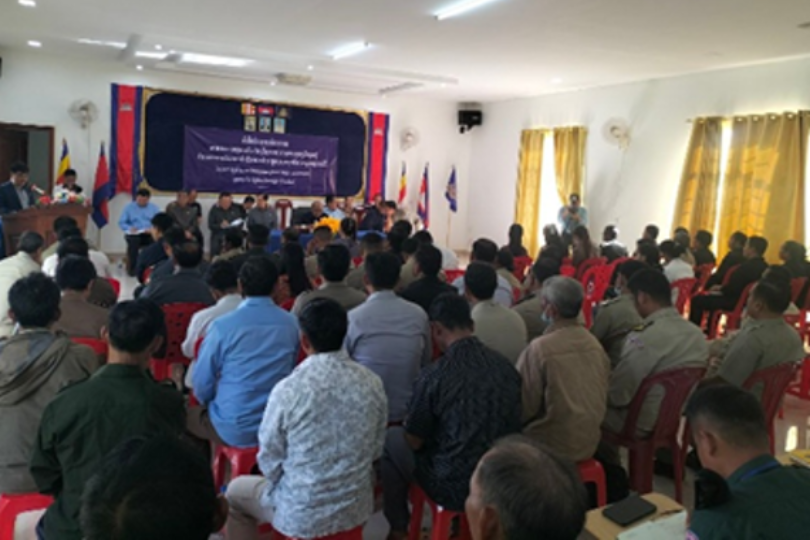
Recognizing that sustainable community development requires not only knowledge but also practical skills and innovative thinking, My Village Organization (MVi) successfully organized its Second Staff Capacity Building Training on 16 June 2026 under the Mutual Learning for Nature & People (MLNP) Project. Titled “MVi Capacity Building Training: Empowering Staff to Drive Climate Action and Sustainable Development Goals (SDGs) through Green Micro-Business Development for Local Communities, Facilitated by the Project Participants of the Social & Economic Enhancement Programme (SEEP), the training focused on transforming climate-smart ideas into practical and market-oriented solutions that can be applied to strengthen green livelihoods and community resilience in Stung Treng Province.

Unlike the first training, which introduced the foundations of climate change and sustainable development, this second session emphasized how those concepts can be translated into real community actions and Green Micro-Business opportunities. Through practical discussions and experience sharing, participants explored how renewable energy, sustainable agriculture, circular resource management, and enterprise development can work together to create environmentally responsible and economically viable livelihood models.

A key highlight of the programme was the introduction of renewable energy and solar panel waste management. Participants gained practical insights into responsible management of end-of-life solar panels through reuse, repair, refurbishment, and recycling, while also exploring how renewable energy technologies can contribute to reducing environmental impacts and supporting sustainable rural development. The training reinforced the importance of adopting resource-efficient practices that minimize waste and maximize the value of available materials.

The programme further demonstrated how multi-layer farming, organic farming, efficient waste management, and low-cost livestock feeding practices can improve productivity, restore soil health, conserve water, and reduce production costs. Rather than presenting these as individual technologies, the sessions illustrated how they can be integrated into climate-smart farming systems that strengthen food security and generate sustainable income for local communities. Participants were also introduced to practical business development tools, enabling them to identify local opportunities, assess available resources, and develop environmentally sustainable Green Micro-Business initiatives that respond to local needs.

To broaden participants’ understanding of enterprise development, the facilitators used the Bangladesh farming process as a practical learning model to demonstrate the complete agricultural value chain—from production planning and crop management to post-harvest handling, storage, transportation, marketing, and value addition. The training concluded by examining the opportunities and challenges of Green Micro-Business development in Stung Treng and identifying practical strategies to strengthen market access, improve business resilience, and create long-term economic opportunities through locally driven solutions.

By combining technical knowledge with practical business approaches and field experiences shared by the SEEP Project Participants, the training strengthened MVi staff’s capacity to facilitate climate-resilient, market-oriented, and environmentally sustainable livelihood initiatives. As the second staff capacity building training under the MLNP Project, the programme reaffirmed MVi’s commitment to continuous organizational learning and to equipping its staff with the knowledge and skills needed to support resilient indigenous communities and sustainable local development across Stung Treng Province.

16 Jun
Reflecting, Learning and Moving Forward: MVi Organizes Internal Knowledge Sharing and Reflection Session under the MLNP Project
Project  : Reflecting, Learning and Moving Forward: MVi Organizes Internal Knowledge Sharing and Reflection Session under the MLNP Project
Location : Stung Treng Province, Cambodia

Continuous learning is essential for delivering meaningful and sustainable development outcomes. Guided by this principle, My Village Organization (MVi) successfully organized an Internal Knowledge Sharing and Reflection Session under the Mutual Learning for Nature & People (MLNP) Project, creating a platform for staff and project participants to reflect on experiences, celebrate achievements, identify challenges, and strengthen future project implementation.

The session focused on reviewing the progress made during the first three months of the project, encouraging participants to critically examine what worked well, what challenges emerged, and how valuable lessons could be translated into improved practices. Rather than simply reviewing completed activities, the event promoted a culture of continuous learning, collaboration, and adaptive management, enabling participants to collectively identify practical solutions for enhancing programme quality and organizational performance.

Throughout the discussions, participants reflected on key project interventions, including staff capacity-building initiatives, Green Micro-Business (GMB) development, business planning, action plan development, guideline and manual preparation, climate action, renewable energy, tools development, and climate adaptation planning. Experiences from field visits, coordination meetings, and staff training were also shared, allowing participants to connect technical knowledge with real implementation experiences and identify opportunities for further improvement.

A significant outcome of the session was the collective reflection on implementation challenges and the practical solutions adopted throughout the project’s early stages. Participants discussed issues such as language barriers, coordination, and scheduling constraints, while highlighting how teamwork, regular communication, and collaborative problem-solving helped maintain project progress. The session reinforced the value of documenting lessons learned and applying those insights to improve future interventions.

The meeting also provided an opportunity to review project implementation against the approved MLNP Project Gantt Chart, confirming that planned activities had progressed according to schedule while identifying priorities for the months ahead, including business plan development, awareness-raising activities, entrepreneur training, business monitoring, and documentation of best practices.

More than a routine review meeting, the Internal Knowledge Sharing and Reflection Session demonstrated MVi’s commitment to becoming a learning organization—one that continuously improves by listening, reflecting, and adapting. By strengthening collaboration and promoting evidence-based decision-making, the session has further enhanced MVi’s capacity to deliver climate-resilient, community-driven, and sustainable development initiatives for indigenous communities in Stung Treng Province.

MVi extends its sincere appreciation to the Project Participants of SEEP and all staff members for their active participation, openness, and commitment to mutual learning. Their collective knowledge and shared experiences continue to strengthen the partnership and contribute to the successful implementation of the MLNP Project.

16 Jun
Sharing Ideas, Building Partnerships: WorldFish Visits MVi to Explore Green Micro-Business Initiatives

My Village Organization (MVi) recently welcomed representatives from WorldFish for a coordination and knowledge exchange meeting at its office in Stung Treng Province. The meeting provided an opportunity for both organizations to exchange experiences, discuss their ongoing initiatives, and explore areas of mutual interest in promoting sustainable and climate-resilient community development.

During the meeting, representatives from WorldFish expressed keen interest in learning about the Green Business and Green Micro-Business (GMB) ideas developed by the MLNP Project Participants. In response, the Project Participants presented a range of innovative business concepts, explaining their objectives, implementation approaches, and potential contributions to improving household incomes while promoting environmental sustainability.

The discussions highlighted several environmentally friendly business models, including climate-smart agriculture, sustainable farming systems, renewable energy applications, efficient resource management, and value-added livelihood opportunities. The Project Participants also demonstrated how these business ideas are designed to address local challenges by creating income-generating opportunities, strengthening climate resilience, and encouraging the sustainable use of natural resources.

The WorldFish representatives appreciated the innovative concepts and actively engaged in discussions on their technical feasibility, market potential, and long-term sustainability. They also shared valuable insights and practical recommendations to further strengthen the proposed business ideas and enhance their potential impact at the community level.

Beyond the exchange of ideas, the meeting reinforced the importance of collaboration, knowledge sharing, and mutual learning among development organizations. Both organizations recognized that combining local experience with technical expertise can foster more innovative, practical, and sustainable solutions for community development.

The meeting concluded with a shared commitment to maintaining close communication and exploring future opportunities for collaboration. MVi believes that such knowledge exchange initiatives not only strengthen institutional partnerships but also inspire innovation and contribute to developing environmentally sustainable, economically viable, and community-driven livelihood opportunities for the people of Stung Treng Province.

02 Jun
MVi Strengthens Staff Capacity on Climate Change and Green Micro-Business through the First Capacity Building Training under the MLNP Project
Project  : MVi Strengthens Staff Capacity on Climate Change and Green Micro-Business through the First Capacity Building Training under the MLNP Project
Location : Stung Treng Province, Cambodia
Date : 02 June 2026

As part of its commitment to strengthening organizational capacity and promoting sustainable community development, My Village Organization (MVi) organized its First Staff Capacity Building Training on 2 June 2026 under the Mutual Learning for Nature & People (MLNP) Project. Titled “MVi Capacity Building Training: Empowering Staff to Drive Climate Action and Sustainable Development Goals (SDGs) through Green Micro-Business Development for Local Communities,” the training was facilitated by the Project Participants of the Social & Economic Enhancement Programme (SEEP). The event marked the beginning of a series of organizational learning initiatives designed to enhance the technical knowledge, practical skills, and professional competencies of MVi staff, enabling them to better support climate-resilient and sustainable livelihoods within local communities.

The training aimed to enhance staff knowledge and technical capacity on Climate Change, Sustainable Development Goals (SDGs), Green Micro-Business, Cambodia’s climate context, and climate adaptation strategies. Through interactive presentations, group discussions, and experience-sharing sessions, participants strengthened their understanding of how climate change affects communities and how sustainable development approaches can contribute to building resilient livelihoods.

A key focus of the training was Green Micro-Business, where participants explored environmentally friendly livelihood options such as organic farming, tree nurseries, compost production, waste recycling, renewable energy, sustainable fisheries, and eco-friendly food processing. The sessions highlighted how these initiatives can create income opportunities while protecting natural resources and supporting sustainable local development.

Participants also learned about Cambodia’s climate history, changing rainfall patterns, rising temperatures, and the specific climate challenges facing Stung Treng Province. These discussions helped staff better understand local climate risks and identify practical adaptation measures that can be integrated into community-based development programmes.

One of the most valuable aspects of the training was the peer-learning approach, where the SEEP Project Participants shared their practical experiences and lessons learned from implementing the MLNP Project. This exchange of knowledge encouraged collaborative learning, strengthened institutional capacity, and equipped MVi staff with practical insights that can be applied in future project implementation.

As the first staff capacity-building initiative under the MLNP Project, the training laid a strong foundation for future organizational learning. MVi believes that investing in staff development is essential for improving programme quality and delivering more effective, climate-resilient, and sustainable development interventions for indigenous communities in Stung Treng Province.

MVi sincerely appreciates the valuable contributions of the Project Participants of SEEP for sharing their expertise and practical experiences. Their support reflects the spirit of mutual learning that lies at the heart of the MLNP Project and continues to strengthen collaboration between partner organizations.

15 Jul
Advancing CSCs’ Capacity to Enhance Sustainability Solution in the Eastern Plains Landscape of Cambodia

Donor :  EU

Project :  Advancing CSCs’ Capacity to Enhance Sustainability Solution in the Eastern Plains Landscape of Cambodia

Implement: MVi

Date : October 29, 2022

This is a part of improvement for the community development work of Pou Chrey Protected Area, which is placed in Pou Chrey Commune, Pichreada District, Mondulkiri Province. On October 29th, 2020, My Village Organization team organized a meeting with the community of Pou Chrey Community Protected Area in order to present the results of the work for community management that has been implemented so far by focusing on the four main pillars: (1) Natural resources are conserved, (2) The well-being of community members has been improved, (3) Community welfare is guaranteed and (4) External support to be used as a tool for reflecting on community performance. There were a total of 15 participants, 7 females. As a result, after the community meeting, we observed that external support received 2.83 points, natural resources were maintained at 2.71 points, and the well-being of community members improved about 2.43, but for community welfare guaranteed got only 1.75 points. Through this meeting, we can assess that the management of the community in the Community Protected Area of ​​Pu Chrey should be further strengthened on the third pillar, which focuses on ensuring the well-being of the community.

Note: For each pillar, we score from 1 to 4, score 1 is the lowest point and score 4 points is the highest score, used as a tool for reflecting the efficiency of the community.

15 Jul
Advancing Indigenous Land Rights: Pu Treng’s Steady Progress Toward ICLTs

The Bounorng Indigenous community of Pu Treng village in Mondulkiri Province, home to 179 households and 733 residents, has long worked to safeguard its ancestral lands within the Keo Seima Wildlife Sanctuary.

Recognized by both the Ministry of Interior and the Ministry of Rural Development, Pu Treng initiated its Indigenous Communal Land Title (ICLT) process in 2012.

The indigneous community submitted formal documentation, including internal statutes, maps, and a recognized management structure, covering 1,338.69 hectares of communal land.

Determined to secure land titles and protect against encroachment, Pu Treng CLT, with support from My Village Organization (MVi) and other CSOs, pushed forward the ICLT process.

On September 13, 2024, a landmark meeting was held with the governor of Mondulkiri and three key departments—Land Management, Environment, and Forestry & Fisheries—to accelerate the public display for Pu Treng and neighboring Pou Leh communities.

The public display marked a major milestone. Community members carefully reviewed land information for accuracy, identified missing plots, and formally requested their inclusion.

A follow-up discussion on January 15, 2025, with the Department of Land Management addressed these concerns.

To resolve the outstanding issues, MVi in collaboration with other CSOs, committed to assisting the community in verifying the missing land titles.

Responding to this effort, the Department of Land Management scheduled verification of nine remaining plots, starting in April 2025.

15 Jul
Youths’ Action for Biodiversity Conservation (YABC)

Donor : USAID

Project :  Youths’ Action for Biodiversity Conservation (YABC)

Activity: Training on SBSS and Theme I on Reduction of Luxury Wood Furniture Consumption

Date : March 27 – May 15, 2022

Recognizing that threats to forests, wildlife and biodiversity are the most important issues in the eastern landscape of Cambodia. My Village is an NGO that carries out a number of activities to conserve natural resources by empowering indigenous communities such as protected area communities, ethnic women’s networks, and ethnic youth networks.

Project of Youths’ Action for Biodiversity Conservation (YABC) focus on youth participation to increase the capacity for widespread dissemination of forests, wildlife, biodiversity and the environment, especially to local communities effectively.

Through the above issues, My Village Organization organized a training course on: “Reduction of Luxury Wood Furniture Consumption” for 13-school youth in the target area of ​​Mondulkiri province for youths. The purpose of this training is to 

– Increase awareness of the benefits of forests and biodiversity

– Raise awareness of the impact of using luxury wood furniture

– Increase the positive attitude of the participants and share it with their friends, family as well as through Social and Behaviour Change Communication (SBCC)

A total of 325 youths (226 women) and 159 indigenous youth (116 women) participated. Through pre-testing the ability of youths, we observed that we provided the training, only about 43 percentage have an understanding of the forest and luxury wood furniture. In contrast, after they received the training from My Village Organization on: “Reduction of Luxury Wood Furniture Consumption”, they can learn more about the forest, as well as the problem of furniture made from luxury wood up to 80 percentage. In addition, they committed to reduce of using the furniture made of luxury wood from day to day, as well as to share the knowledge they gained from this training to share to their families, relatives, friends and the community as much possible. Furthermore, they also gained a lot positive thinking and how to talk about forest issues and luxury wood furniture to their relatives, families, friends and community for reduction of luxury wood consumption and forest and biodiversity conservation. The methods that have been successfully implemented in this training course include group discussion, presentation, Q&A, watching educational videos and role play which can encourage they to reduce shyness or fear to express themselves, especially the performance from role play helped the youths to remember and better understand the relationship between the forest and luxury wood furniture. 

***Note: For scoring the test of youth’s ability before and after the training, use the evaluation level of five numbers, the lowest score is represented as number 1 and the highest score is represented as number 5. Thank you!

15 Jul
Securing Indigenous Land Rights in Pu Treng: A Community-Led Effort Toward ICLT Recognition

In Pu Treng village, Dak Dam commune, Mondulkiri province, Bournorng Indigenous community continues to protect its ancestral heritage and lands through collective governance rooted in tradition.

With a population of 108 households and 532 members, including 274 women, the community practices rotational farming and sustainable forest use while preserving cultural spaces for ceremonies, music, and spiritual worship.

Despite formal recognition of their Indigenous identity by the Ministry of Rural Development and Interior in 2014, the community’s journey toward securing its Indigenous Communal Land Title (ICLT) faced significant obstacles.

Though an application for collective land registration was submitted in 2017—covering 1,338.69 hectares—prolonged government delays led to rising land encroachment and frustration. Some households even withdrew from the ICLT process out of disillusionment.

In response, My Village Organization (MVi) and supporting NGOs partnered with the community to revive the ICLT efforts.

Together, they reviewed and updated legal documentation, restructured the ICLT committee, and facilitated community engagement with authorities from village to provincial levels. This renewed momentum helped address encroachment issues, revalidate land boundaries, and strengthen the community’s legal standing.

By the end of 2024, these efforts yielded tangible results. The Mondulkiri Provincial Department of Land Management conducted a public display—signaling the final procedural step toward issuing the ICLT certificate. Community representative Mr. Chren expressed hope and gratitude: “Thanks to MVi and donors for their continued support. I believe our land rights will soon be formally secured.”

15 Jul
friends and family to save forests from not Purchasing Luxury Wood Furniture

Donor: USAID
Project: Youths’ Action for Biodiversity Conservation (YABC)
Activity: Educational Video on I can speak up and support and persuade my friends and family to save forests from not Purchasing Luxury Wood Furniture
Date: March 28, 2022

My Village Organization (MVi) has organized three online campaigns through Online Community Center (OCC) Facebook Page on demand reduction for luxury wood furniture, reducing bushmeat consumption and stopping littering. These campaigns were conducted to increase the understanding and knowledge about the negative impacts of bushmeat consumption, luxury wood furniture and littering on biodiversity, forests, environment and human health and to increase the participation of citizens to support and take positive action for the purpose of reducing bushmeat consumption and demand for luxury wood furniture and stopping littering.

The video below is part of a campaign to Demand Reduction for Luxury Wood Furniture, which will highlight the benefits of forests, the destruction of natural resources through the use of luxury wood furniture, and youth participation to reduce the use of furniture made of luxury wood.

.

#TogetherForCambodianForest

#SayNoLuxuryWoodFurniture

#SayNoDamageForest

Facebook Page Link: https://www.facebook.com/OCCMVi 

Facebook Name: Online Community Center


15 Jul
Educational Video on Purchasing Luxury Wood Furniture Would mean that you are contributing to the loss of Cambodia’s beautiful forest

Donor: USAID
Project: Youths’ Action for Biodiversity Conservation (YABC)
Activity:Educational Video on Purchasing Luxury Wood Furniture Would mean that you are contributing to the loss of Cambodia’s beautiful forest
Date: March 28, 2022

My Village Organization (MVi) has organized three online campaigns through Online Community Center (OCC) Facebook Page on demand reduction for luxury wood furniture, reducing bushmeat consumption and stopping littering. These campaigns were conducted to increase the understanding and knowledge about the negative impacts of bushmeat consumption, luxury wood furniture and littering on biodiversity, forests, environment and human health and to increase the participation of citizens to support and take positive action for the purpose of reducing bushmeat consumption and demand for luxury wood furniture and stopping littering.

The video below is part of a campaign to Demand Reduction for Luxury Wood Furniture, which will highlight the benefits of forests, the destruction of natural resources through the use of luxury wood furniture, and the disadvantages deforestation.

#TogetherForCambodianForest

#SayNoLuxuryWoodFurniture

#SayNoDamageForest

Facebook Page Link: https://www.facebook.com/OCCMVi 

Facebook Name: Online Community Center

This site is registered on wpml.org as a development site.