info@mvicambodia.org 0979519123/0889517123

Driving Practical Solutions for Climate-Resilient Livelihoods: MVi Organizes the Second Staff Capacity Building Training under the MLNP Project

16 Jun

By: giant

Sustainable Forest Resource Management

Comments: No Comments.

Project  : Driving Practical Solutions for Climate-Resilient Livelihoods: MVi Organizes the Second Staff Capacity Building Training under the MLNP Project
Location : Stung Treng Province, Cambodia
Date : 16 June 2026

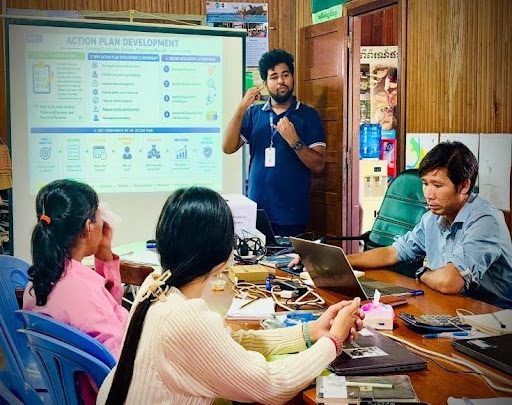
Recognizing that sustainable community development requires not only knowledge but also practical skills and innovative thinking, My Village Organization (MVi) successfully organized its Second Staff Capacity Building Training on 16 June 2026 under the Mutual Learning for Nature & People (MLNP) Project. Titled “MVi Capacity Building Training: Empowering Staff to Drive Climate Action and Sustainable Development Goals (SDGs) through Green Micro-Business Development for Local Communities, Facilitated by the Project Participants of the Social & Economic Enhancement Programme (SEEP), the training focused on transforming climate-smart ideas into practical and market-oriented solutions that can be applied to strengthen green livelihoods and community resilience in Stung Treng Province.

Unlike the first training, which introduced the foundations of climate change and sustainable development, this second session emphasized how those concepts can be translated into real community actions and Green Micro-Business opportunities. Through practical discussions and experience sharing, participants explored how renewable energy, sustainable agriculture, circular resource management, and enterprise development can work together to create environmentally responsible and economically viable livelihood models.
A key highlight of the programme was the introduction of renewable energy and solar panel waste management. Participants gained practical insights into responsible management of end-of-life solar panels through reuse, repair, refurbishment, and recycling, while also exploring how renewable energy technologies can contribute to reducing environmental impacts and supporting sustainable rural development. The training reinforced the importance of adopting resource-efficient practices that minimize waste and maximize the value of available materials.

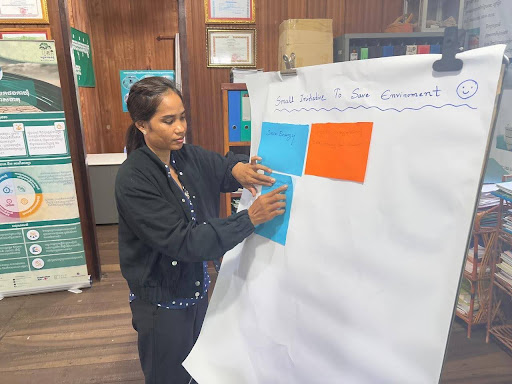
The programme further demonstrated how multi-layer farming, organic farming, efficient waste management, and low-cost livestock feeding practices can improve productivity, restore soil health, conserve water, and reduce production costs. Rather than presenting these as individual technologies, the sessions illustrated how they can be integrated into climate-smart farming systems that strengthen food security and generate sustainable income for local communities. Participants were also introduced to practical business development tools, enabling them to identify local opportunities, assess available resources, and develop environmentally sustainable Green Micro-Business initiatives that respond to local needs.

To broaden participants’ understanding of enterprise development, the facilitators used the Bangladesh farming process as a practical learning model to demonstrate the complete agricultural value chain—from production planning and crop management to post-harvest handling, storage, transportation, marketing, and value addition. The training concluded by examining the opportunities and challenges of Green Micro-Business development in Stung Treng and identifying practical strategies to strengthen market access, improve business resilience, and create long-term economic opportunities through locally driven solutions.

By combining technical knowledge with practical business approaches and field experiences shared by the SEEP Project Participants, the training strengthened MVi staff’s capacity to facilitate climate-resilient, market-oriented, and environmentally sustainable livelihood initiatives. As the second staff capacity building training under the MLNP Project, the programme reaffirmed MVi’s commitment to continuous organizational learning and to equipping its staff with the knowledge and skills needed to support resilient indigenous communities and sustainable local development across Stung Treng Province.

This site is registered on wpml.org as a development site.